A vision for Fairfield's next chapter
FIREHAWKS
Ite, inflammate omnia
"Go forth and set the world aflame."
— St. Ignatius of Loyola
But first
IMAGINE A WORLD
WITHOUT THE STAG
Quick — picture a Fairfield Stag.
Not the logo. Not the seal. The feeling. What does it look like on a hat someone actually wears to a bar? What does the student section chant? What's the hashtag? What does the recruit see when they open the mailer?
Now picture explaining to a women's basketball player that she competes under the name for a male deer. Picture the ESPN graphic next to UConn, next to Villanova, next to Notre Dame. Picture the 18-year-old scrolling through offers on their phone.
The Stag served Fairfield honorably for 78 years. But the world it was built for — a men's-only Jesuit college tied to the Archdiocese of Hartford — no longer exists.
The question isn't whether to honor the past. It's whether the past is holding back the future.
This is real
Fairfield University
FIREHAWKS
Chapter I
78 YEARS OF TRADITION
In 1947, Fairfield's first athletes took the court as "The Men in Red." A year later, the Board of Trustees voted between two student-submitted names: Stags and Chanticleers.
"As a member of the Board of Trustees, I remember voting at a board meeting late in 1948 on the naming for our athletic teams. We voted for Stags over Chanticleers!"
— Fr. Charles F. Duffy, S.J.
The name honored Fairfield's bond with the Archdiocese of Hartford — "hart" (a male red deer) + "ford" (a river crossing). A clever etymology. A foundation of pride. The Stags identity has served Fairfield with distinction for nearly eight decades.
Chapter II
THE LANDSCAPE
HAS CHANGED
GENDER EQUITY
"Stags" refers exclusively to male deer. Since Fairfield began admitting women in 1970, women's teams have competed under a name that linguistically excludes them. As Title IX scrutiny intensifies, this creates growing institutional risk.
VISUAL SCALABILITY
The stag mark has proven difficult to modernize into the geometric, angular visual language that defines elite collegiate branding. Programs like Oregon and Cincinnati have demonstrated that a mark must work at every scale.
MARKETING DEPTH
The stag offers limited language for headlines, fan culture, social media, and broadcast. Compare the depth of Bearcat culture at Cincinnati or Razorback culture at Arkansas — vocabulary fuels everything.
Chapter III
THE ONLY ANIMAL
BESIDES HUMANS
KNOWN TO USE FIRE
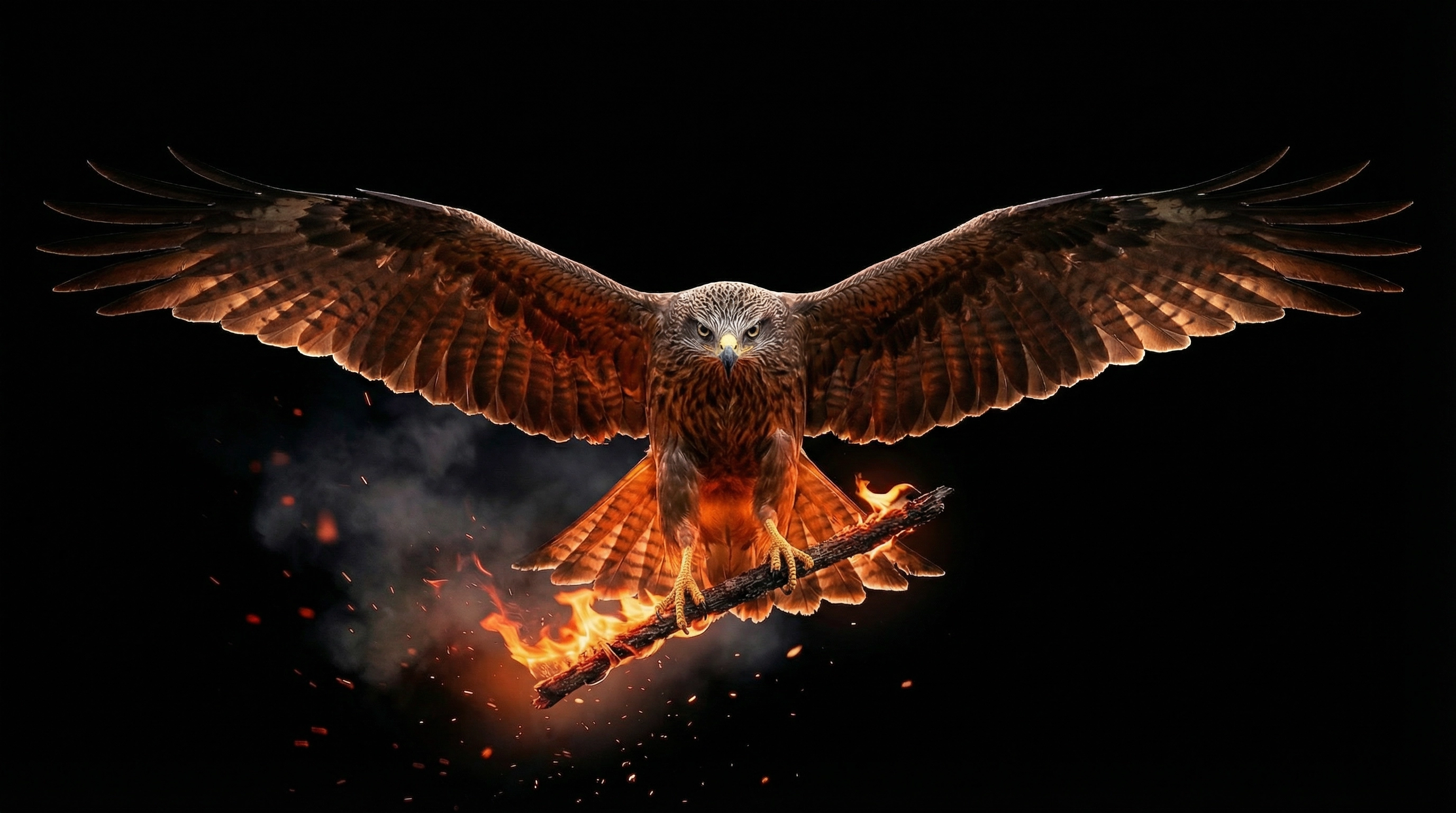
In the savannas of Northern Australia, three raptor species — the Black Kite, the Whistling Kite, and the Brown Falcon — have been documented intentionally carrying burning sticks from active wildfires and dropping them in unburnt areas to flush prey into the open.
Aboriginal Australians have known this for over 40,000 years. Western science confirmed it in a landmark 2017 paper published in the Journal of Ethnobiology.
They don't flee from fire. They carry it. They use it with intention and precision. They transform destruction into opportunity.
The Mark
ANGULAR.
MODERN.
BUILT TO SCALE.
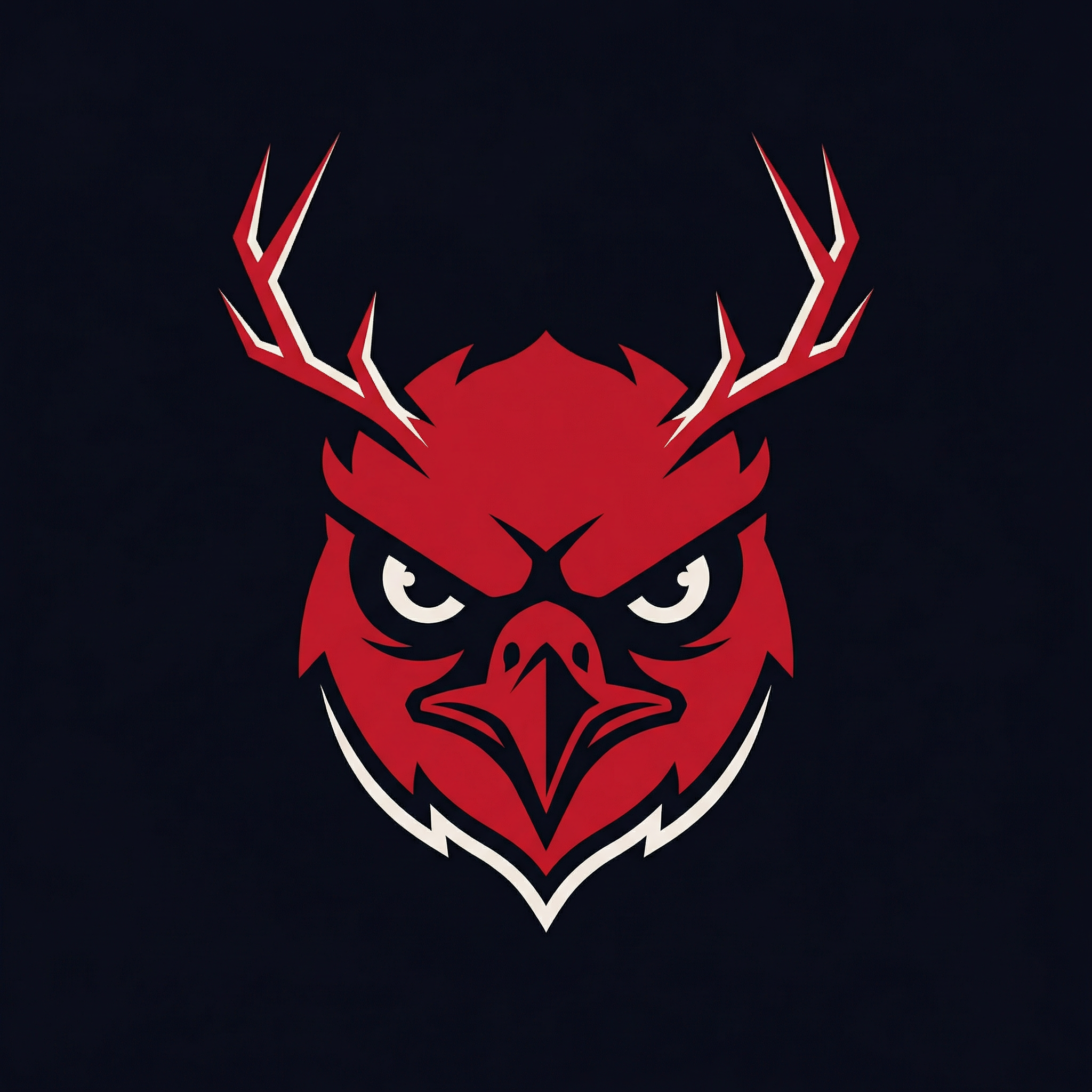
The Firehawk mark is deliberately geometric — not a cartoon mascot but a sharp, modern athletic symbol. Flame elements integrate into the hawk's form, creating a silhouette that reads as both raptor and fire. It works at 1 inch on a hat clasp and 40 feet on a billboard.
The crown carries antlers. Honoring the past while ushering Fairfield into the future.
The Letter Mark
THE F
STAYS.
IT EVOLVES.
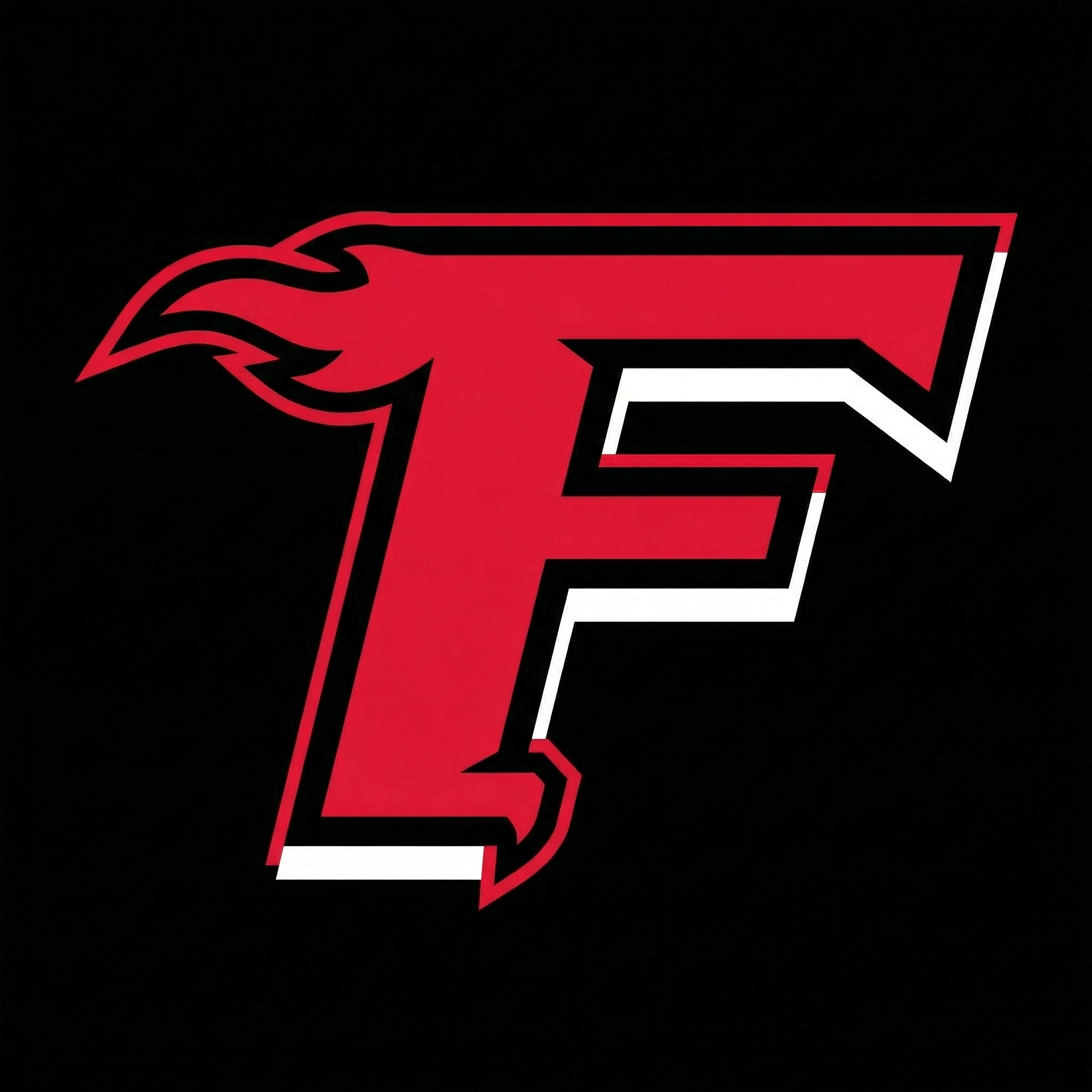
The Fairfield F is one of the program's most recognizable assets. You don't throw that away. You sharpen it. The flame element extending from the top-left corner signals the new era while keeping every ounce of the original's forward-leaning aggression.
Caps. Helmet sides. Social avatars. Sideline gear. Anywhere the full mark is too complex, the Flame F carries the brand.
Chapter IV
Ite, inflammate omnia
"GO FORTH AND SET
THE WORLD AFLAME"
— St. Ignatius of Loyola, Founder of the Society of Jesus
Fire is not incidental to Jesuit identity. It is central. The IHS seal — the mark of the Society of Jesus — features flames rising from the cross. St. Ignatius described the spiritual life as a process of being set ablaze with purpose.
The Spiritual Exercises use fire as a metaphor for divine love that transforms and purifies. Jesuit education has always been about igniting something in students that burns long after they leave campus.
The Firehawk embodies this perfectly: an animal that carries fire with intention, that spreads it deliberately, that uses it not for destruction but for sustenance.
This is not a mascot that happens to be red. This is a mascot whose very nature is the Ignatian mission made visible.
Chapter V
CONTINUITY,
NOT RUPTURE
Fairfield's first athletes were called "The Men in Red" in 1947. The student section is still "The Red Sea." The school colors have always been red.
"Firehawks" encodes red into the name itself. The transition from Stags to Firehawks is not a break — it is an evolution from a name chosen for its Latin wordplay to a name chosen for what Fairfield actually stands for.
The Compound Word Advantage
THE BEST MASCOTS ARE WORDS
NOBODY ELSE OWNS
Both words are universally understood. The combination is new at the D1 level. It is grounded in real science. And it carries a story that no other program can tell.
Beyond Sports
A BRAND THAT WORKS
ACROSS THE ENTIRE UNIVERSITY
A great mascot doesn't just serve athletics. It gives every department on campus a shared visual language and a vocabulary that works naturally — without forcing it.
Today, Fairfield's marketing teams work around the mascot rather than through it. Campaign names require wordplay. Event branding feels disconnected from athletics. The Firehawks identity removes that ceiling — fire is a universal metaphor that translates to giving, admissions, alumni engagement, and institutional storytelling without a single forced portmanteau.
SET THE WORLD AFLAME
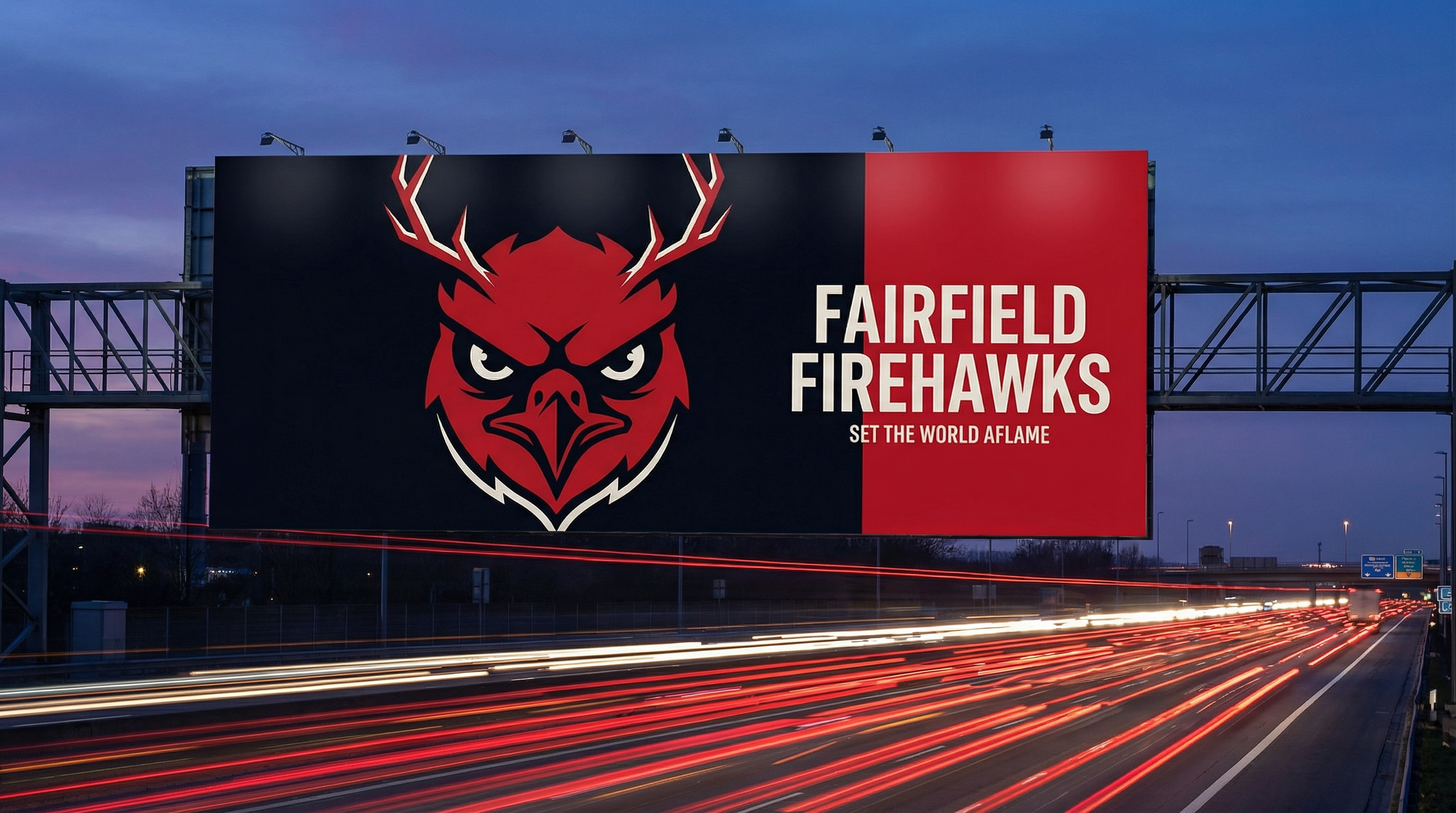
The brand at 65 mph. Unmistakable from the highway.
GIVING DAY
"Fuel the Fire" — a Fairfield University Giving Day
Every gift fans the flame. Donor matches become "Spark Matches" — when one donor's gift ignites another. Giving tiers named Ember, Blaze, and Inferno. The Jesuit line writes the closing appeal: "Go forth and set the world aflame." The language is native to the brand, not grafted onto it.
ADMISSIONS & RECRUITMENT
"The Fire Starts Here" — the recruitment headline
Accepted student mailers arrive in a matte black envelope with an ember-red seal. Campus visit days become "Ignition Days." The language of fire maps naturally to the beginning of a student's journey — sparking curiosity, lighting a path, carrying a flame forward into the world.
ALUMNI & INSTITUTIONAL IDENTITY
Coming home — the alumni connection
Alumni don't need the hard sell. They need to feel like the place they loved is still worth being proud of. A stronger brand does that quietly — better merch, a mark their kids actually want to wear, a homecoming weekend that feels like it belongs to a program on the rise. The commencement address still ends the way it always has: go forth and set the world aflame.
The best university brands give their marketing teams a running start, not a constraint to work around. The Firehawks identity hands every office on campus — from Advancement to Admissions to Alumni Relations — a vocabulary that sounds intentional on the first try.
On The Court
THE FLOOR OF
MAHONEY ARENA
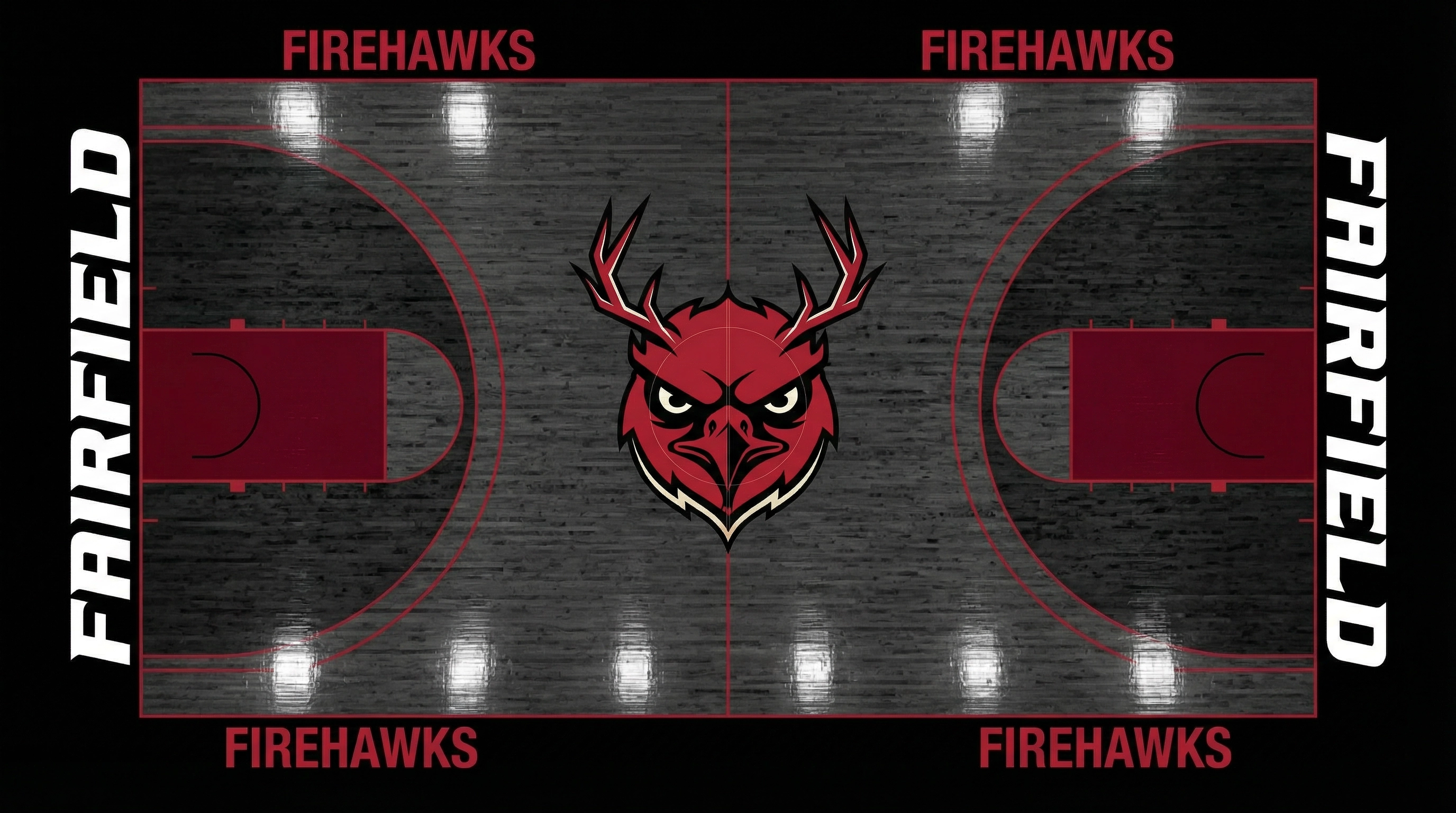
FAIRFIELD across the baselines. The antler-hawk at center court. A wall of crimson mohawks rising from the student section. When the camera pans to The Inferno, there is zero question whose house this is.
The Student Section
WELCOME TO
THE INFERNO
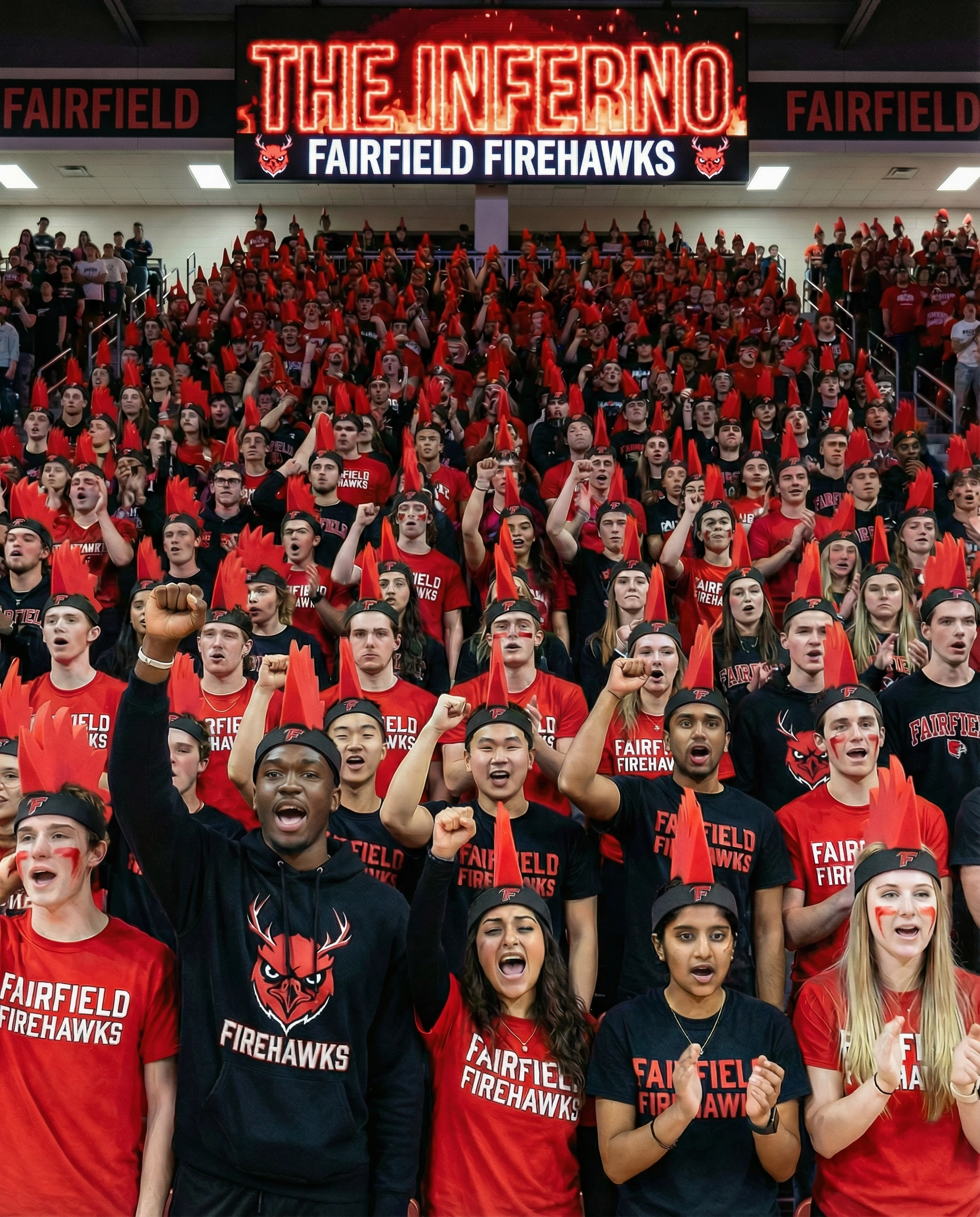
Game Day
PREMIUM,
NOT GENERIC
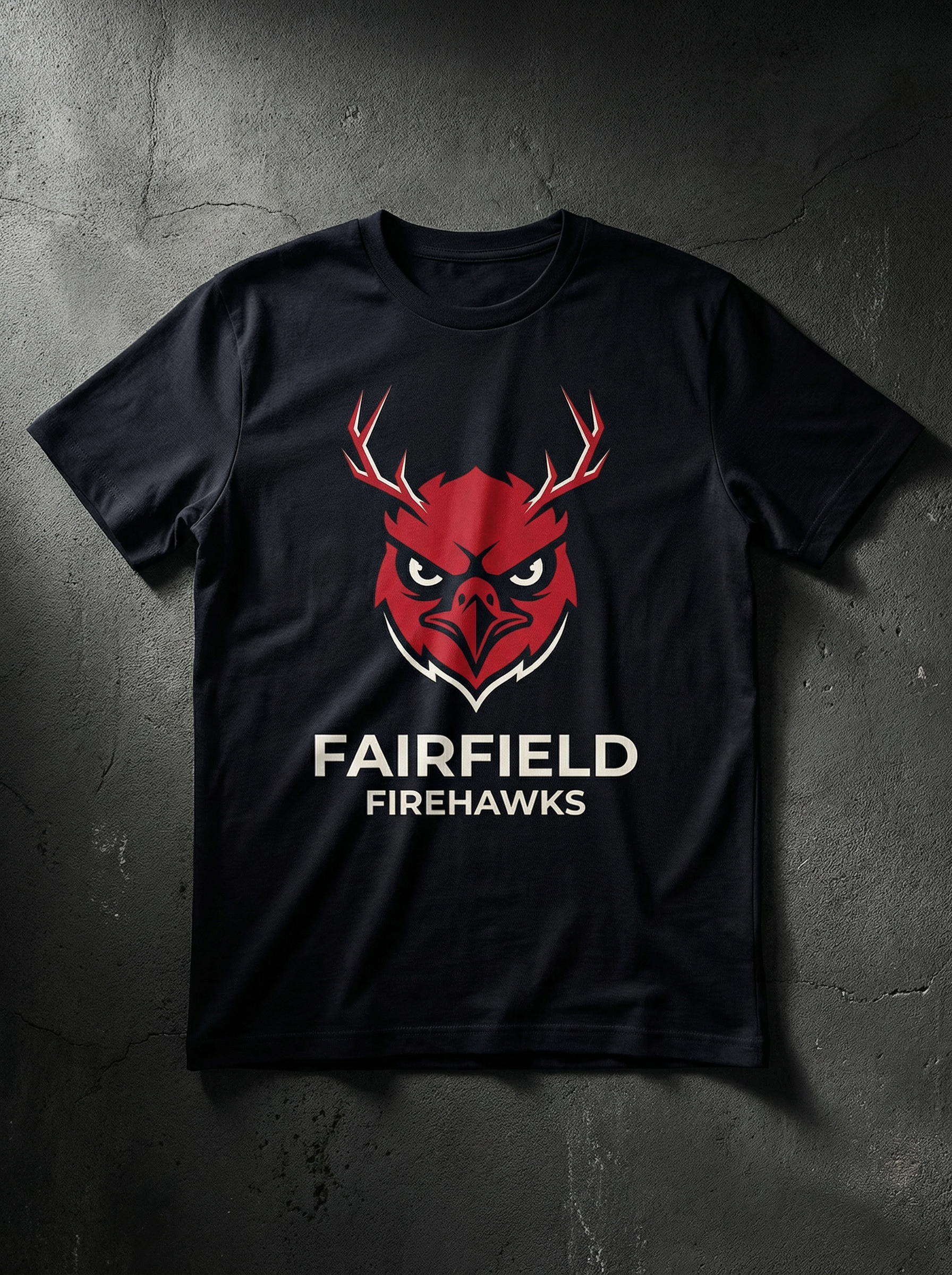
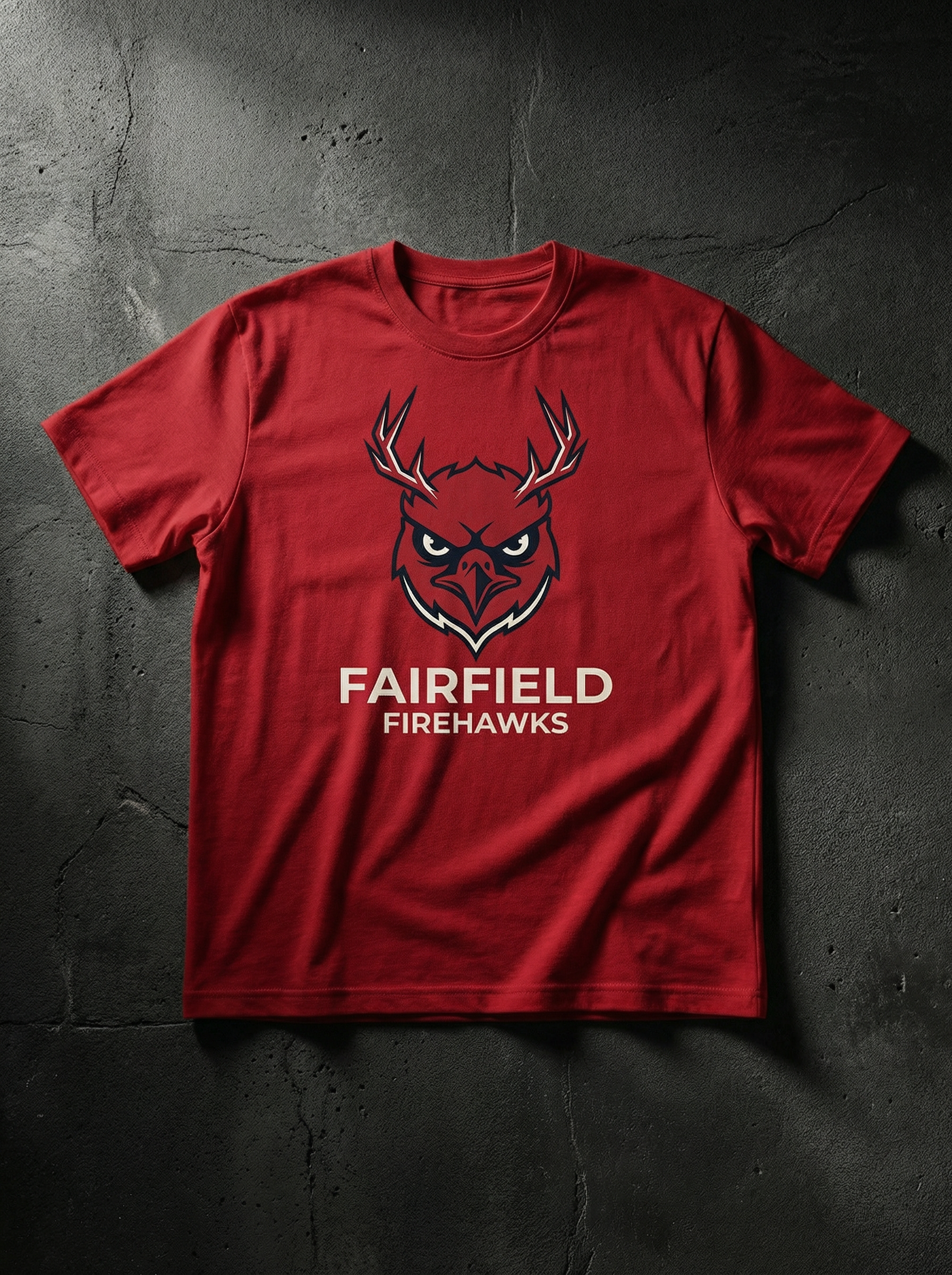
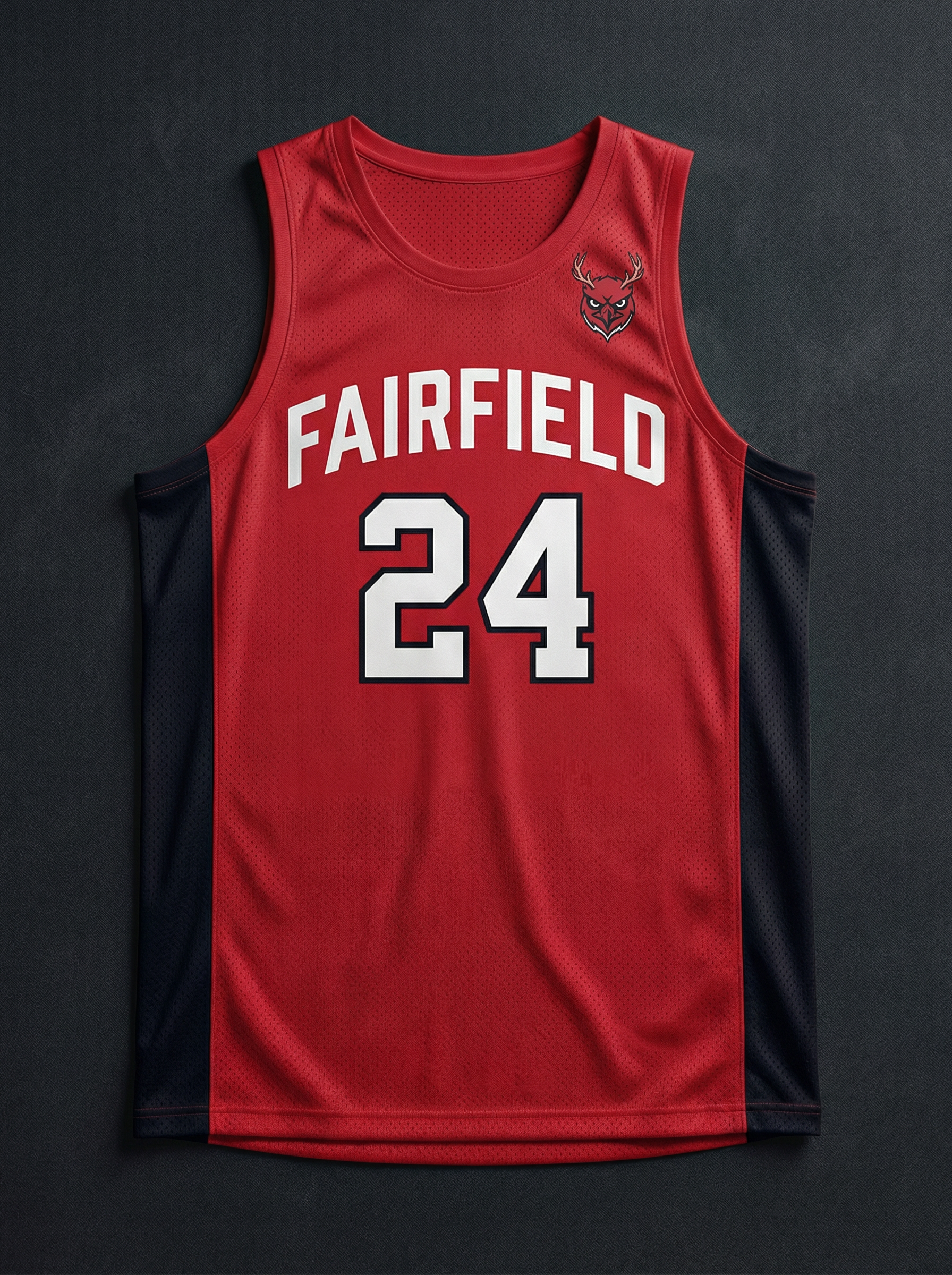
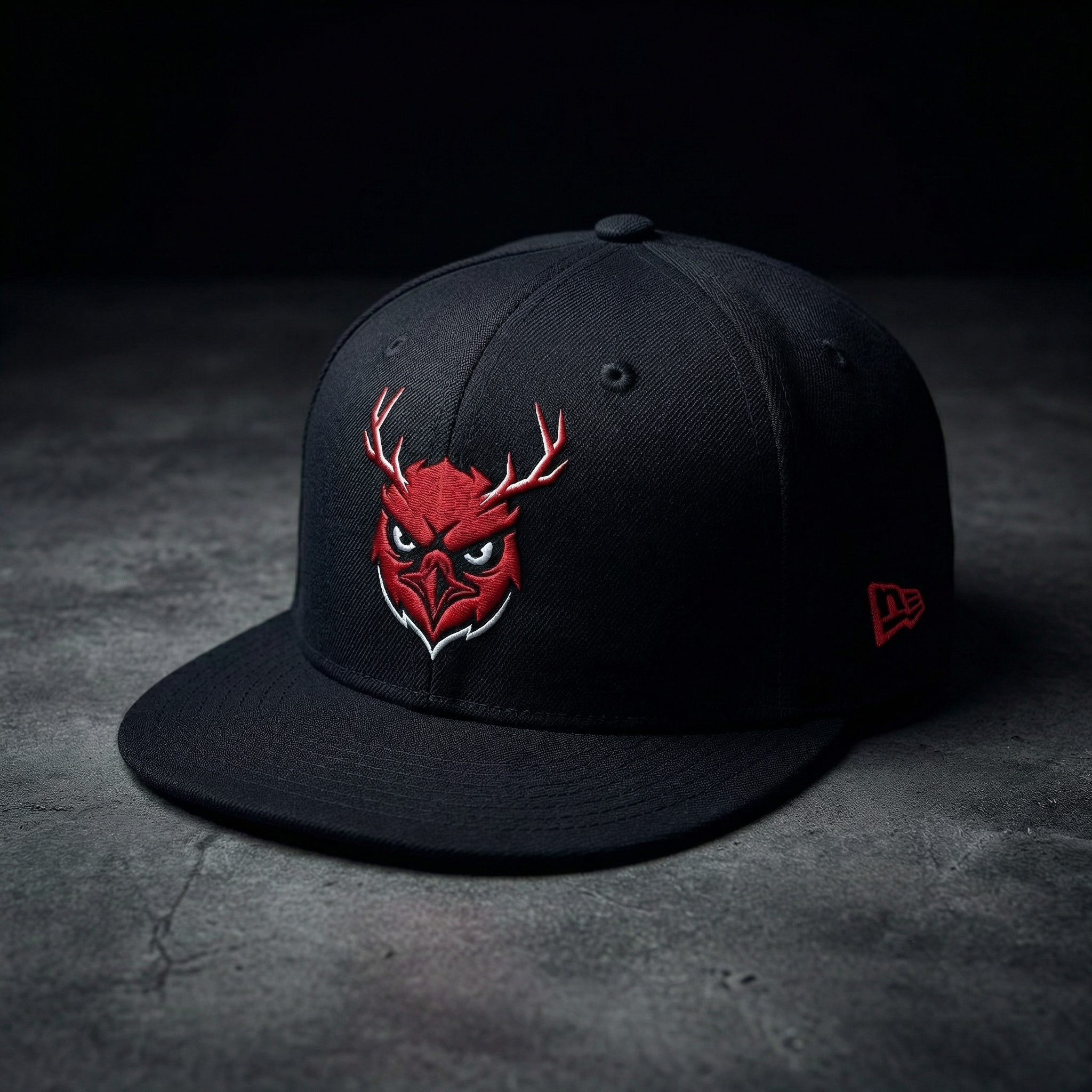
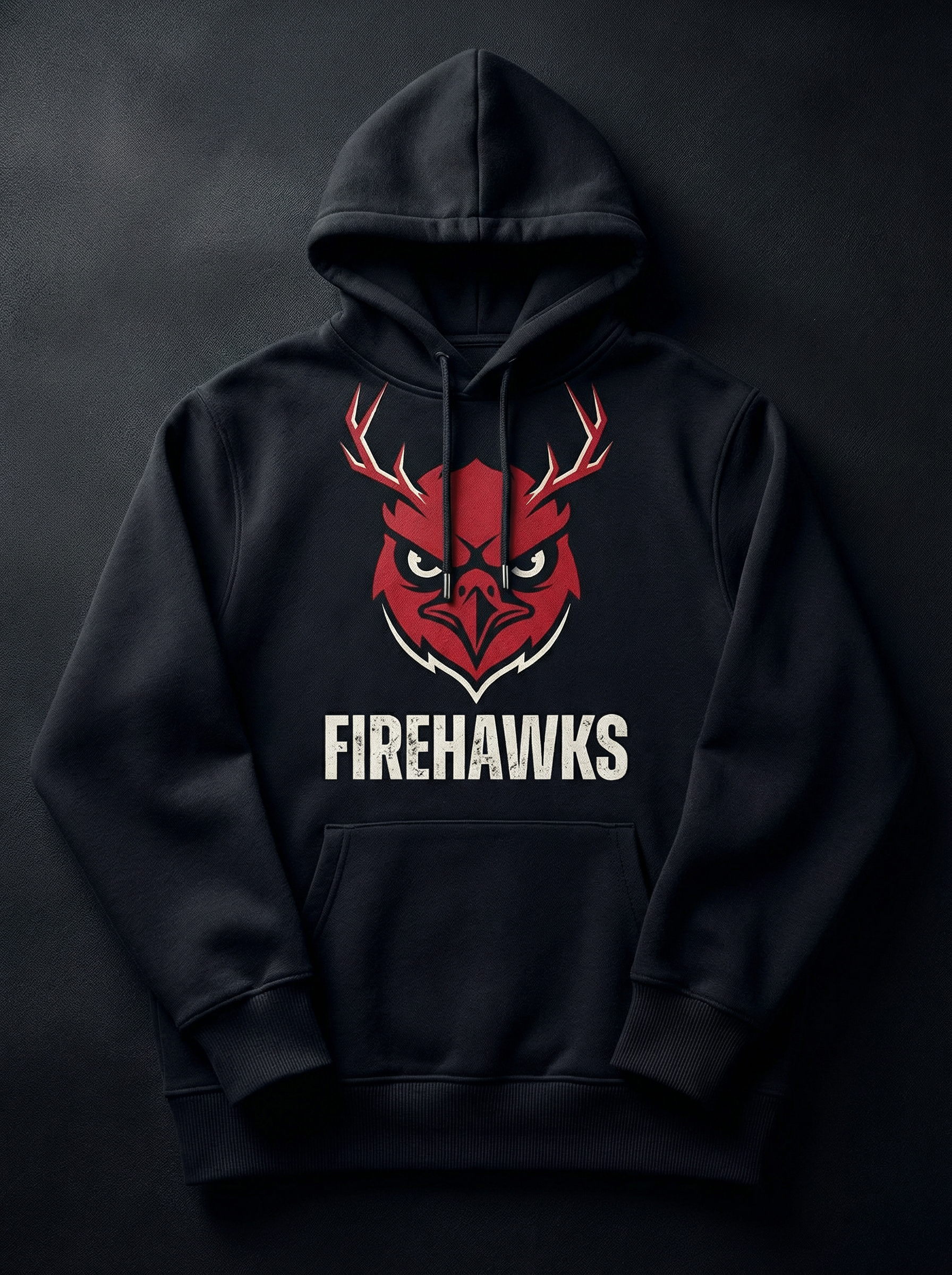
Merchandise that competes with streetwear, not just the bookstore. The near-black hoodie with the oversized mark is a piece students will wear off campus — not just on game day.
The Statement Piece
LIVES IN THE
ROTATION,
NOT THE CLOSET
The best college merch doesn't feel like college merch. It feels like something you'd buy even if you didn't go there.
Fan Culture
EUROPEAN FOOTBALL
MEETS AMERICAN
COLLEGE BASKETBALL
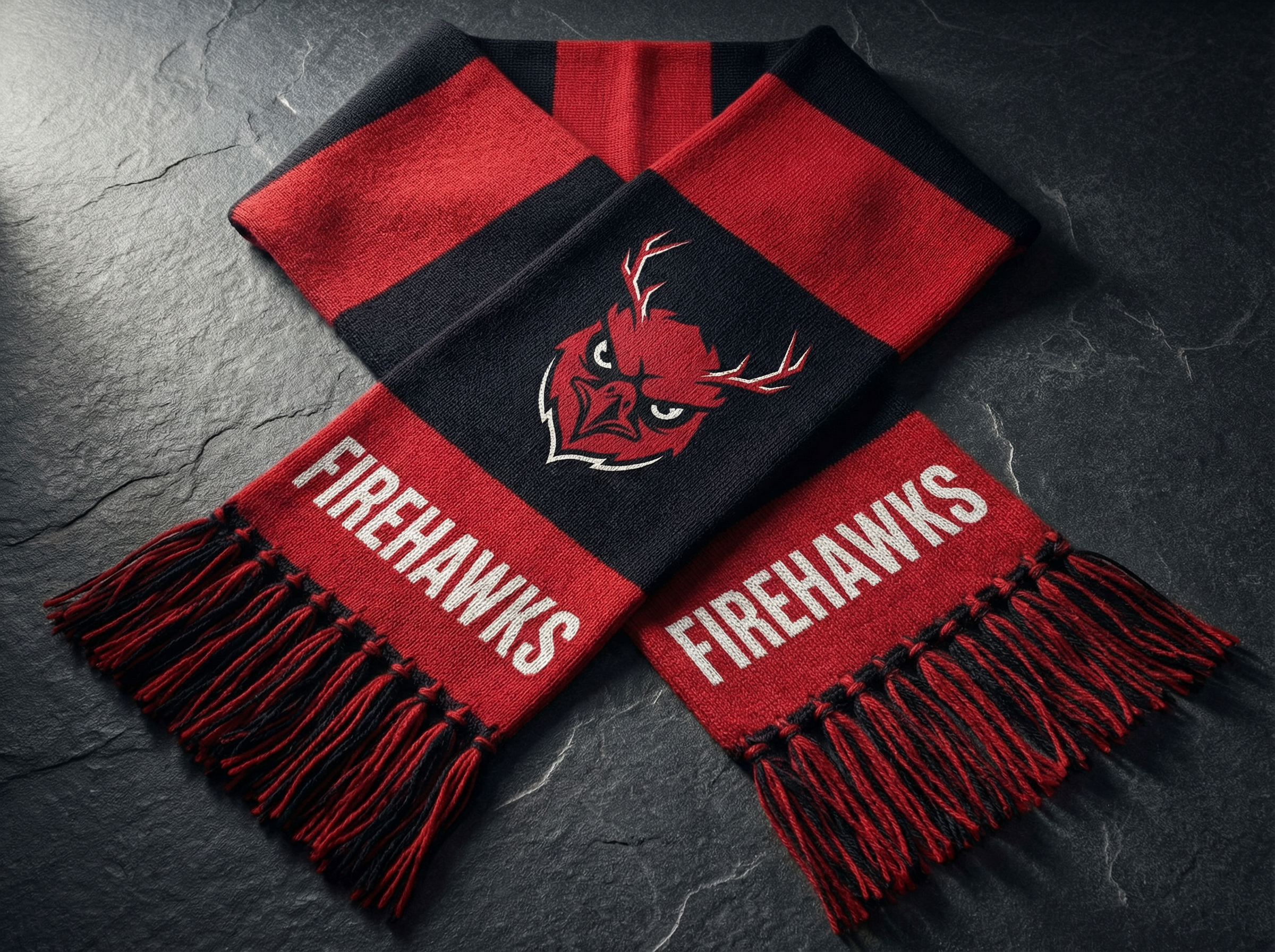
Imagine The Red Sea waving these above their heads during starting lineups. A fan culture artifact that creates atmosphere and photographs beautifully for broadcast.
The Signature Prop
EVERY GREAT FAN SECTION
NEEDS A
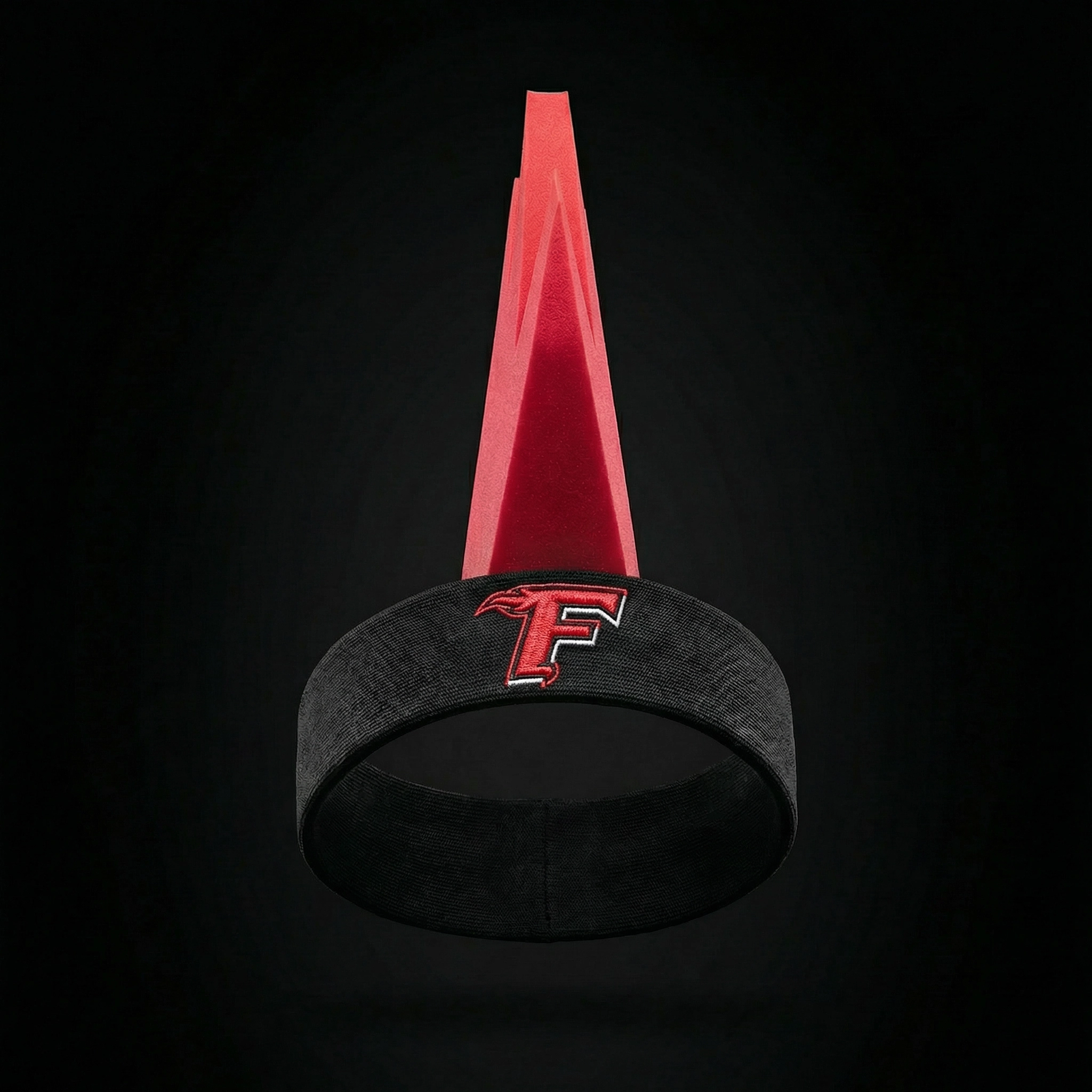
CHEESEHEAD
A foam fire mohawk. Black headband with the Flame F, a single sharp crimson fin rising like a blade. Handed out at the first home game. Worn to every game after. The kind of thing that becomes a tradition before anyone decides it should be.
Beyond Apparel
WHEN YOUR MASCOT IS A FIREHAWK,
THE IDEAS WRITE THEMSELVES
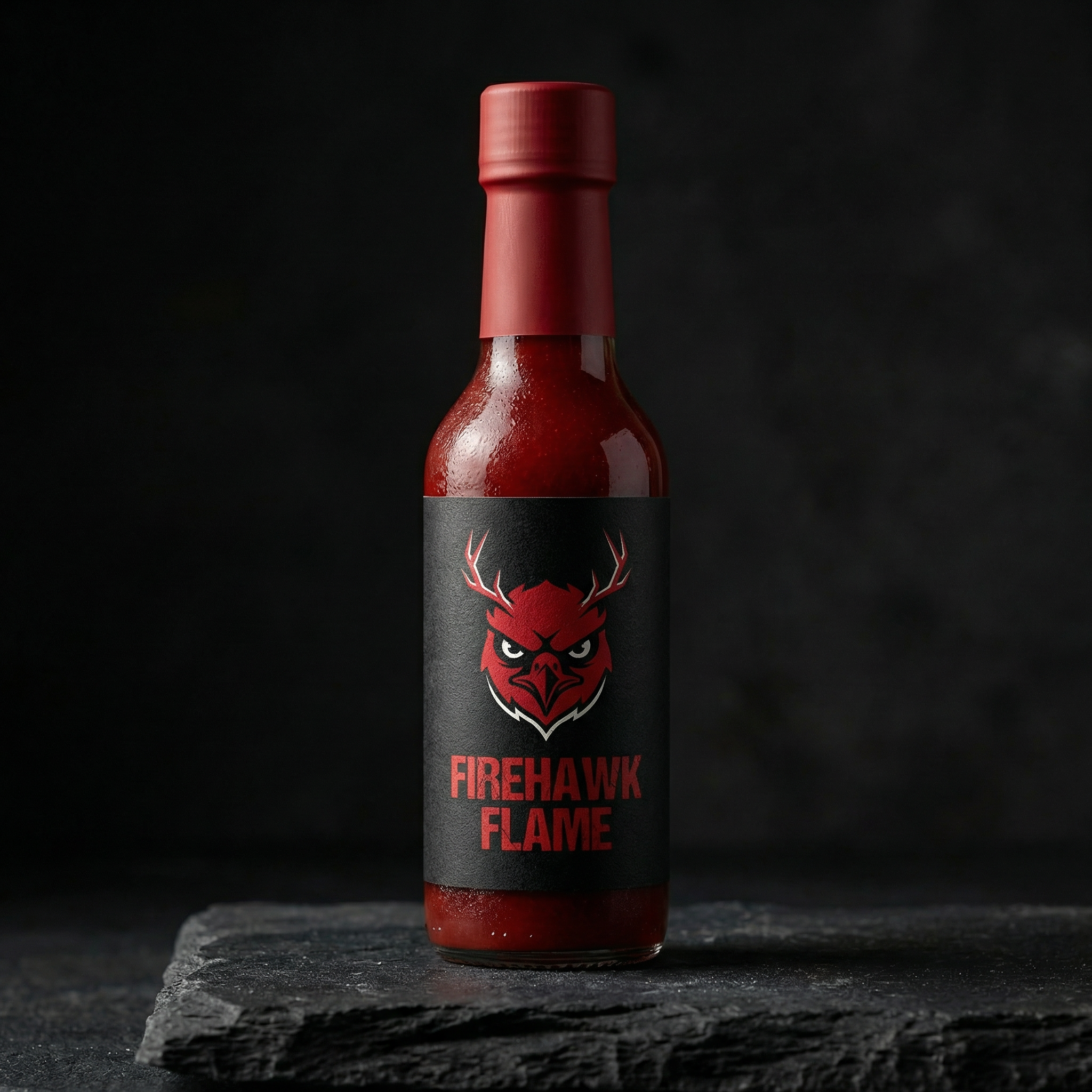
FIREHAWK FLAME
Small-batch branded hot sauce. The fire connection is literal. Sold at the bookstore, shipped to alumni. The kind of product that generates word-of-mouth and social media content.
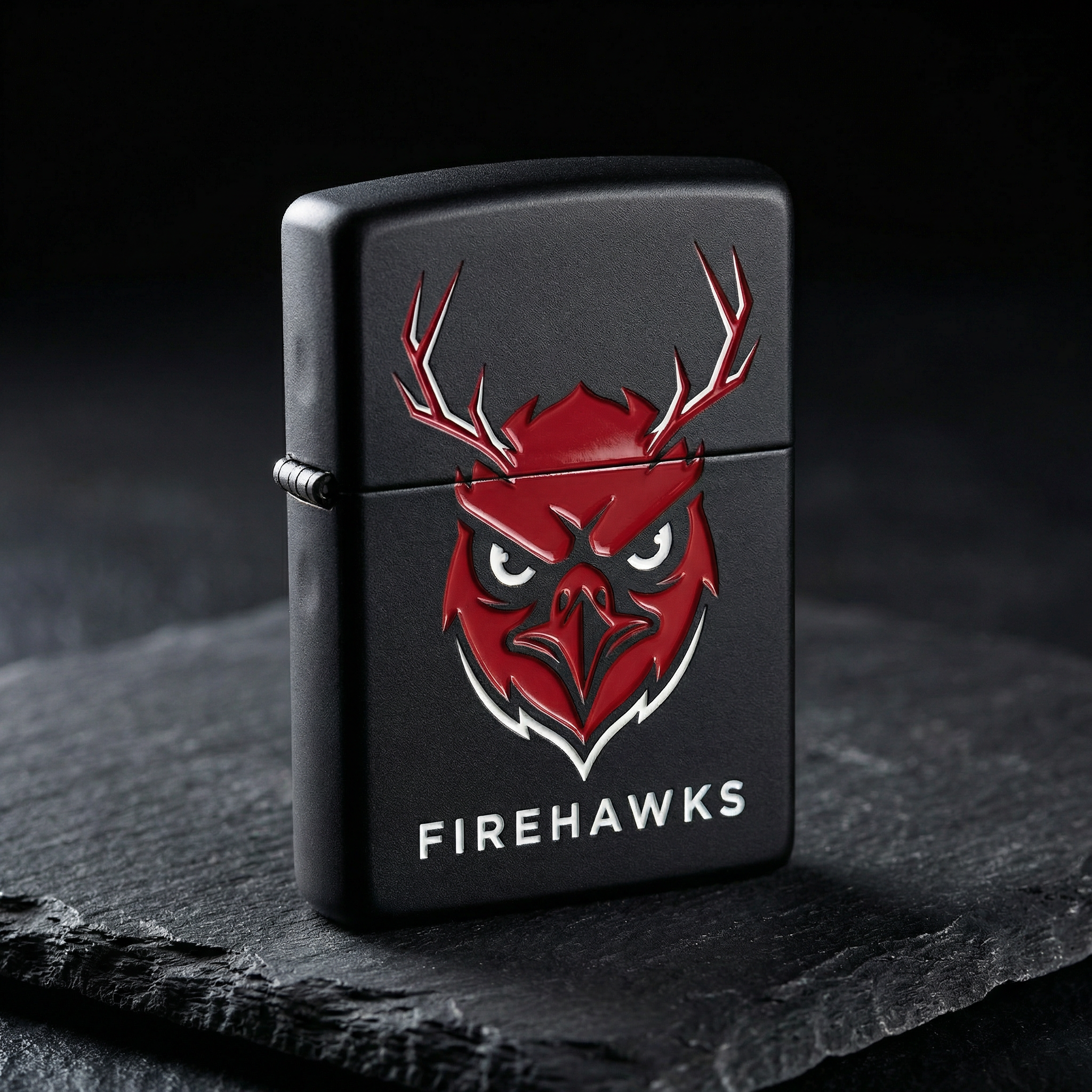
THE FIREHAWK LIGHTER
A matte black Zippo with laser-etched Firehawk mark. A collector's item for alumni events and donor gifts. A firehawk lighter that literally produces fire — perfect brand alignment.
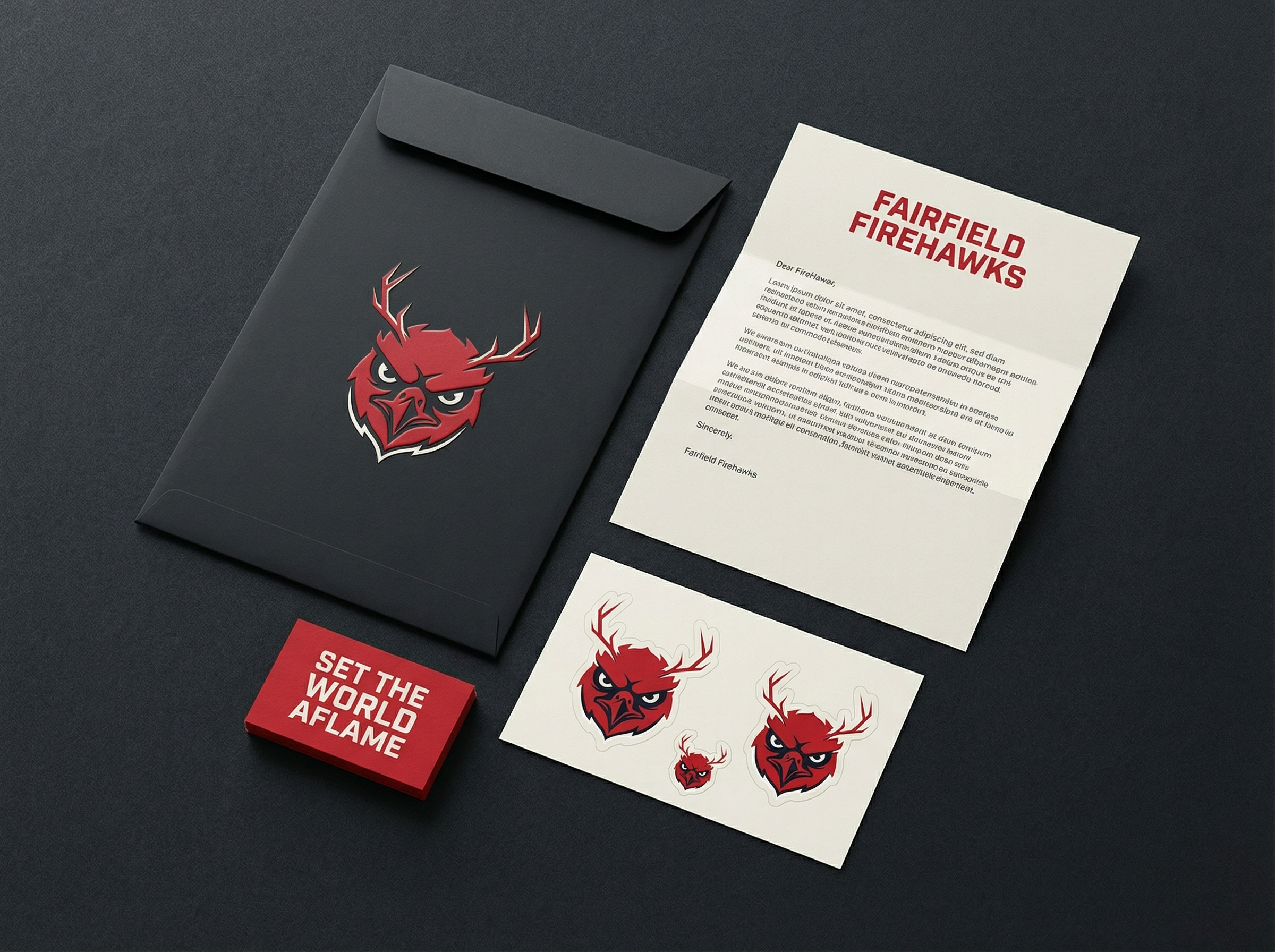
THE RECRUITMENT PACKAGE
Premium matte envelope, branded stickers, custom enamel pin in a red gift box. Headlined: "The Fire Starts Here." The unboxing experience that makes a recruit choose Fairfield.
The Language
A VOCABULARY
READY FOR EVERY CHANNEL
CAMPAIGN LINES
- "The Fire Starts Here"
- "Fuel the Fire"
- "Ignite the Future"
- "Set the World Aflame"
FAN CULTURE
- Student section → "The Inferno"
- Pregame chant → "Light it up"
- Game day → "Ignite the Arena"
PRESS & BROADCAST
- "The Firehawks scorched the Gaels"
- "Fairfield's flame burns bright in March"
- "The Inferno was rocking"
SOCIAL & RECRUITING
- #FireUp #CarryTheFlame
- #TheInferno #FairfieldFire
- "The fire starts here. Where does yours burn?"
Conference Positioning
OWN THE
MAAC
Canisius Golden Griffins. Iona Gaels. Manhattan Jaspers. Marist Red Foxes. Niagara Purple Eagles. Quinnipiac Bobcats. Rider Broncs. Saint Peter's Peacocks. Siena Saints.
The Fairfield Firehawks would immediately become the most visually distinctive, most merchandisable, and most narratively rich brand in the conference. When ESPN shows the MAAC tournament bracket, "Firehawks" is the name that makes people stop scrolling.
The Rollout
HONORING THE PAST.
IGNITING THE FUTURE.
MONTHS 1–3
INTERNAL ALIGNMENT
Present to Board of Trustees, alumni advisory council, student government, and coaching staff. Gather feedback. Refine the mark and brand system.
MONTH 4
PUBLIC REVEAL
Coordinated launch event at Mahoney Arena. Unveil the court, the mark, the merchandise. Livestream to alumni. "The Fire Starts Here" campaign across all channels.
MONTHS 5–12
FULL DEPLOYMENT
New uniforms for all 20 varsity programs. Updated signage, digital presence, recruitment materials. Highway billboard campaign. Bookstore merchandise rollout.
YEAR 2+
CULTURE BUILDING
Establish "The Inferno" student section identity. Launch Firehawk Flame hot sauce. Annual "Lighting of the Flame" ceremony at convocation. Build the traditions.
From Men in Red to Firehawks
THE FIRE
STARTS HERE
Ite, inflammate omnia
"Go forth and set the world aflame."
St. Ignatius of Loyola
The fire has always been here. Now it has a name.